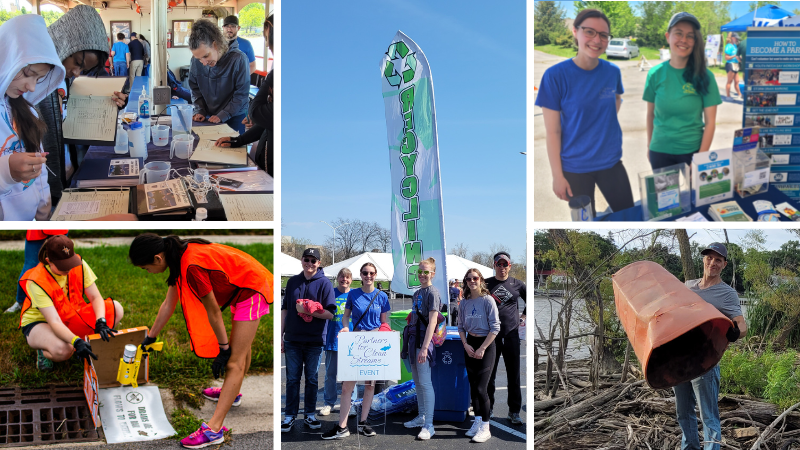
 Carrying last year’s focus on clean-on-your-own volunteering forward, in 2022 the PCS Team continued to promote Clean Your Streams 365 and our Remote Kickoff week leading up to Clean Your Streams Day. However, we also began to return to larger gatherings for in-person programming, outreach, and education, very glad to be safely in shared space with our community again. Compared to last year, we were able to offer more Get the Lead Out sessions, more Storm Drain Marking sessions, and many more staff-lead CYS 365 clean-ups. Clean Your Streams Day participation flourished with 173 more volunteers than last year. Across all our clean-up programs, PCS volunteers removed more than twice as much Northwest Ohio marine debris in 2022 than 2021, with our 2022 total weighing in at 26,320 pounds. This is an incredible feat!
PCS also had a busy year supporting community projects and partnerships. These included educational outreach and clean-ups alongside the City of Toledo’s Trash Trappers, offering stewardship opportunities for TPS students in the UT Lake Erie Center’s “Floating Laboratory on Watershed Science” program, and kicking off our efforts coordinating volunteer water monitoring in Western Lake Erie basin with “Community Water Action in Toledo.” As we’ve done since our founding, we’ve proudly continued our leadership of the Maumee AOC Advisory Committee and its work.
PCS’s adaptation and growth during a time of change are only possible through the generosity of our donors, volunteers, and community partners. If you’d like to make PCS a part of your holiday giving, we encourage you to give via our Facebook Fundraiser. This year, Facebook specifically matches recurring donations, so you can make your gift to Partners for Clean Streams go even further. After your initial donation, your second donation made before December 31, 2022 (up to $100) may be be doubled! You can also donate using our secure PayPal link or send a check to PO Box 203 Perrysburg, OH 43552.
Thank you for keeping “Current” in 2022, and we look forward to seeing you in 2023!
]]> Earlier this autumn, the Maumee Area of Concern achieved a major milestone: Beneficial Use Impairment 1, Restrictions on Fish and Wildlife Consumption, was removed! In sharing this achievement, we wanted to offer a refresher on what we do as the facilitating organization, what BUIs are, and why this removal matters.
The Maumee Area of Concern (AOC) was established in 1987 by an amendment to the Great Lakes Water Quality Agreement, designating a portion of the lower Maumee River and nearby Lake Erie tributaries as a region that needed special attention. The Maumee AOC was given a report card of beneficial use impairments (BUIs): ways of measuring environmental damage. Some example BUIs include “Restrictions on Fish and Wildlife Consumption,” “Beach Closings” or “Degradation of Aesthetics.” Once restoration criteria are met, a BUI can be removed. And once all BUIs are removed from an AOC, it can be delisted – the end goal of all AOCs.
In order to develop the Maumee AOC’s BUIs, the Toledo Metropolitan Area Council of Governments (TMACOG) set up a Maumee Remedial Action (RAP) Committee. In 2007, the RAP Committee determined that that their best path forward would be to form a new nonprofit 501(c)3 organization and to leave the umbrella of TMACOG. Thus Partners for Clean Streams was born! (If you’re interested, we’ve told the fuller version of the story of PCS’s founding in a Currents article earlier this year.)
Now as the designated facilitating organization, PCS helps coordinate the Maumee AOC Advisory Committee (MAAC), which is made up of government officials, businesses, industries, universities, and other interested individuals with a passion for fishable, swimmable, and drinkable water. Part of our job is to report out on restoration project progress and major milestones in our AOC, like BUI removal!
So what does it mean that BUI 1, Restrictions on Fish and Wildlife Consumption, was removed for our AOC this year? The Ohio Lake Erie Commission and Ohio EPA made this recommendation because the conditions now meet restoration criteria that include fish and wildlife consumption that’s no more restrictive than elsewhere outside of the Maumee AOC. This means the fish and wildlife meet safe consumption thresholds used by the Ohio Department of Health in the Ohio Sport Fish Consumption Advisory.
From the recommendation summary:
“All fish species in all waters of the Maumee AOC have been identified as safe to consume at a frequency of one meal per month, or less restrictive, thus meeting the BUI Restoration Target for fish.
“Snapping turtle muscle (meat) in the Ottawa River of the Maumee AOC are below the contaminant levels designated as safe to consume at a frequency of one meal per month or less restrictive, thus meeting the BUI Restoration Target for wildlife, even though an advisory remains as a precaution to minimize the possible exposure risk to contaminated fat bodies while cleaning/preparing snapping turtles for consumption.”
BUI 1 is the second beneficial use impairment to be recommended for removal among the initial 10 BUIs identified as impaired in the Maumee AOC. The first was BUI 12, Added Costs to Agriculture or Industry, which was removed in 2015.
]]>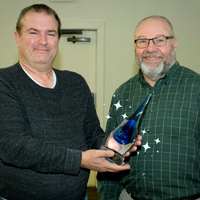 Congratulations to Jeff MacKenzie, environmental science teacher at Whitmer High School, the recipient of our 2022 Annual Environmental Stewardship and Involvement Award! Mr. MacKenzie is a community-minded consummate educator and has been a CYS group leader since 2002. We’re proud to share some highlights from all the great work Mr. MacKenzie has done across our region.
Mr. Jeff MacKenzie has been a teacher with Washington Local schools since 1998. In 2009, he was named the Lucas Soil and Water Conservation District Educator of the Year. During his time at Whitmer, Jeff also worked part time for 13 years as a naturalist and interpretive guide at Metroparks Toledo. Currently, Jeff also works part time for the Toledo Zoo, where he has been employed for the past 12 years. At the Zoo he works at overnight programs for scouts and other groups, as well as animal handling demos and behind the scene tours.
Jeff is working with the Toledo Zoo’s Project Prairie to install prairies at Whitmer High School (the first high school to collaborate on this project) as well as ALL of the elementary schools in Washington Local Schools. Jeff will be working this summer to develop high school curriculum not only for his use at Whitmer, but also for other high schools to use as they become a part of Project Prairie in the future.
Jeff has been a Clean Your Streams group leader since 2002, participating in countless CYS Day and CYS 365 clean-ups. He began bringing students to CYS as an FFA advisor while teaching an environmental systems career class, and continued as the advisor to the Whitmer Science and Environmental Club. Over the years, Jeff’s students consistently place in CYS Youth Challenge Competitions.
It’s a common occurrence to run into Jeff with a group of his students at a broad range of environmental events and programs throughout the community, including tree plantings, Envirothon competitions, keynotes by environmental leaders, and film screenings.
Over the years, Jeff has displayed incredible willingness to support Partners for Clean Streams in whatever way we ask: trying out new equipment or a new app or being available with his students for a National Geographic photographer or documentary videographer, and much more.
It is with great pride that we recognize and congratulate Jeff MacKenzie.
]]> Around the holidays, many of us cook big meals and wind up washing a lot of dishes. There are great opportunities to conserve water (and save money on your water bill!) throughout the season. We’ve put together some of our favorite tips.
First let’s look at the food preparation side. When rinsing fruits and vegetables, rather than running the tap constantly, fill a bowl with water to use for multiple rinses. Water used to boil vegetables can be used to make vegetable broth, which is also a handy way to use your vegetable scraps. You can even go the extra mile and begin composting kitchen scraps this winter. (Ohio EPA put together a handy guide for getting started.) Finally, instead of thawing turkeys and other meats in hot water, plan ahead to put these items in your refrigerator. The USDA recommends that when meat is thawed in water, the water should be changed every 30 minutes to reduce the risk of pathogens – this is a huge water expense that can be eliminated just by defrosting in the fridge.
After a big holiday dinner, there are bound to be lots of dirty dishes. Scraping food waste into the trash or a composting bin offers a chance to save water by not running the sink for an unneeded pre-rinse. When it comes to actually washing dishes, rather than constantly run the tap, use a pre-filled sink. With two sinks of water, you can fill one with soapy water for washing and one with clear water for rinsing clean. If you have a dishwasher, these almost always use less water than washing dishes by hand.
You can also encourage holiday house guests to take up water saving practices you probably do already: only running full loads of laundry, turning off the washer when brushing teeth, and taking care to use just one glass throughout a meal to cut down on the number of dishes to be washed. Personalizing guest glasses offers a chance to be festive and creative with charms, markers, or paint pens.
Happy holidays and warm winter wishes from the PCS Team.
]]> In 2021, the City of Toledo started a project through US EPA’s Trash Free Waters program to install trash capture devices around Toledo’s waterways and raise awareness around marine debris. The City recruited a team of community organizations – including us – to provide outreach and stewardship opportunities.
Three trash traps were installed in Toledo waterways in 2022. Two were “Brute Bin” traps, one in the Ottawa River below the Stickney Avenue Bridge, and the other in the mouth of Swan Creek below the Owens Corning Parkway bridge. The third device was a “Net and Boom” style trap, installed in Silver Creek where it passes nearby Alexis Road. These devices are removed during colder weather to avoid damage, but this project will continue into 2023, when we’ll see the installation of new types of devices, as well as previously installed devices moved to new locations to maximize their effectiveness.
Between the beginning of April and the end of September, Partners for Clean Streams coordinated twelve watershed clean-ups inside the Toledo Trash Trappers’ project area: within five river miles of Lake Erie. Some of these sites were deliberately chosen to take volunteers within sight of installed trash trapping devices in the lower Ottawa River and the mouth of Swan Creek to pair volunteer cleanups with trash traps. Data on types of trash removed during our clean-ups has been sent to the University of Toledo so that graduate student researchers can compare the trash types removed by volunteers on land to the devices in the water. Across these twelve clean-ups, 134 volunteers removed 4,863.5 pounds of marine debris from Toledo waterways.
We will continue to work with the City of Toledo and other partner organizations, including the University of Toledo and Keep Toledo/Lucas County Beautiful, next year in 2023! In the meantime, check out some tips for reducing marine debris every day.
]]>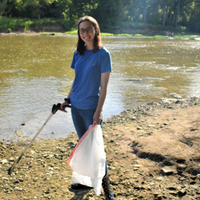 BGSU senior Kayla Kirkpatrick shared her summer and part of autumn with us as our awesome Program Intern. In her own words, here’s how she described her experience with Partners for Clean Streams.
“Over the past three months I have worked as a Program Intern at Partners for Clean Streams. The programs I helped out with included Clean Your Streams 365, Storm Drain Marking, Get the Lead Out, and Reel in and Recycle. It is hard to choose which program is my favorite because they are vastly different from one another. One of my hopes for this internship was to experience a sense of belonging to the organization and my community.”
“I got plenty of experience digging through mud and trash over the past couple of months. Some of the most memorable clean-ups would probably be the CYS 365 Paddle Clean-Ups. This is a partnership with the Toledo Metroparks. Other memorable programs would be the Blue Grass Island Cleanup (in Side Cut Metropark), and the Delaware Island Cleanup. When I wasn’t out in the field, I spent time logging data from the clean-ups, and organizing/ prepping items around the office. While these don’t seem as exciting as the programs themselves, they are very important to keeping the organization running smoothly. Additionally, while I spent most of the programs assisting the Program Coordinator, I got the opportunity to run some programs on my own. I feel like this opportunity helped to boost my leadership skills because I had to keep everything organized. I feel the skills I have learned at this internship will help me in my career in the future as an Environmentalist, as well as help me in my day to day life.”
Thank you for all your hard work, Kayla! The PCS team wishes you the best in your future endeavors.
]]>
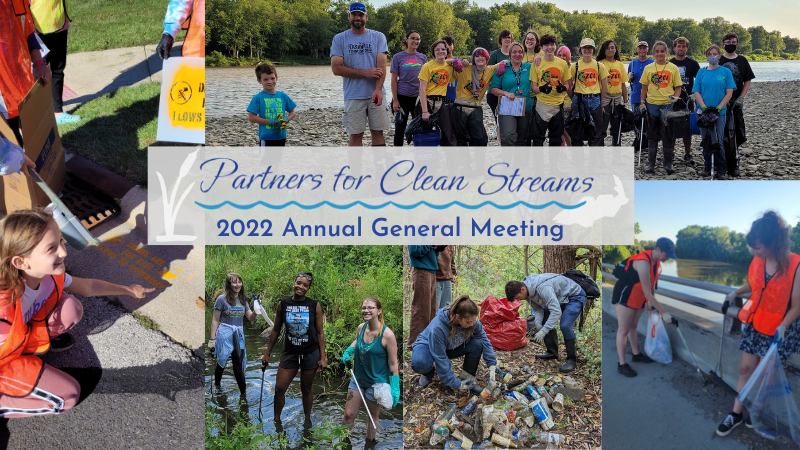 You’re invited to our Annual General Meeting on Tuesday, November 15! Our AGM is where we reflect on the past year’s accomplishments, recognize the recipient of our Annual Environmental Stewardship and Involvement Award, as well as the winners of Clean Your Streams Challenges, and conduct organizational business, including the election of the Board of Directors. You can attend in person or participate remotely via virtual meeting.
We’re hosting our annual meeting at the Toledo Botanical Gardens’ Crosby Conference Center. Doors open at 5:30pm for dinner, refreshments, and conversation. RSVP here to let us know whether you plan to attend in-person either with or without dinner, or to attend virtually. The official meeting will begin at 6:00pm, when virtual participants may join.
If you’d like to lend us your expertise and vision by joining our Board of Directors, contact us at [email protected]. Board nominations will also be accepted at the meeting. If you’re interested in getting to vote for our Board and you’re not yet a PCS general member, you can donate to become a member today.
]]>
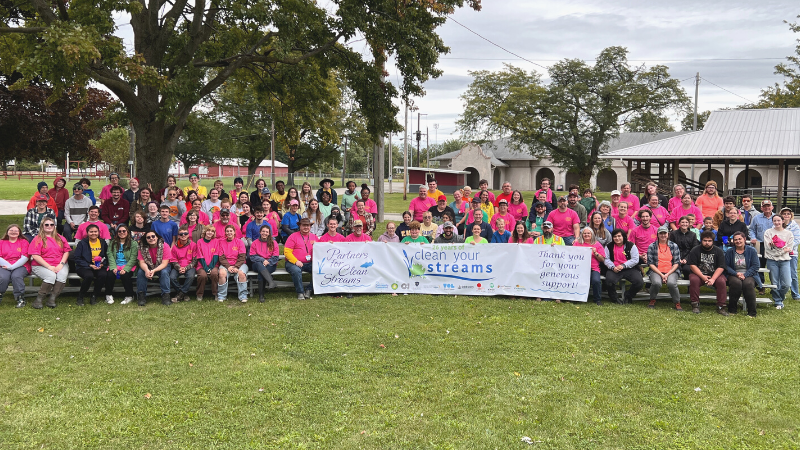 For twenty-six years, we’ve been amazed by our volunteers’ determined water stewardship during Clean Your Streams Day. 2022 was no exception! Partners for Clean Streams is proud to present the results of their efforts in sites cleaned, pounds of marine debris removed, and river miles covered. We’re also announcing the winners of the Clean Your Streams Challenge Competitions and River Partner Certification recipients.
Remote Kickoff
After the success of our clean-on-your-own Remote Kickoff in 2020 and 2021, we knew we wanted to bring back this participation option in 2022. Volunteers chose a time and location during the week leading up to Clean Your Streams Day, submitted liability forms, then shared data and pictures following their clean-ups. The Remote Kickoff allow us to expand the geographic impact of our program. This year, we had groups clean up sites in Port Clinton, Bowling Green, Roche de Boeuf, and even in Hudson, Ohio near Cuyahoga Valley National Park! We also had two groups clean-up via watercraft: Toledo Environmental Services (Maumee River near Imagination Station) and Heritage Environmental Services (Maumee River and Grassy Creek.)
Remote Kickoff Results
- Volunteers: 111
- Sites cleaned: 21
- Pounds of marine debris removed: 2,089.6
- River miles covered: 13.80
In-Person Kickoffs
On September 24, 2022, in-person volunteers arrived at one of eight kickoff locations around Northwest Ohio. From there, groups were assigned a waterway site where they spent the morning removing marine debris and tabulating data on the items they removed. Afterword, many volunteers attended our Clean Your Streams Volunteer Appreciation Picnic and enjoyed free food, education stations, door and raffle prizes, and more.
In-Person Kickoff Results
- Volunteers: 541
- Sites cleaned: 41
- Pounds of marine debris removed: 11,504.9
- River miles: 15.44
Total Impact
- Volunteers: 652
- Sites cleaned: 62
- Pounds of marine debris removed: 13,594.5
- River miles: 29.24
Clean Your Streams (CYS) is the largest single-day watershed clean-up in Northwest Ohio, as well as the largest clean-up in Ohio that contributes marine debris data to the International Coastal Cleanup (ICC) database. Volunteers have an impact on watersheds around our region, including the Maumee River, Ottawa River, Swan Creek, and Maumee Bay tributaries. Thank you to all 652 volunteers that helped remove nearly seven tons of misplaced trash in and around our local rivers.
To date, more than 382,000 pounds of marine debris have been removed from area waterways by over 15,500 volunteers. Among many strange finds this year, volunteers discovered a crashed drone, a rubber ducky with a rainbow unicorn mane, a fire extinguisher, plastic succulent plants, a pregnancy test, three e-bikes, and ninety-four tires! Like last year, the #1 most commonly found item was food wrappers, with over 8000 removed.
To see who won our friendly-yet-competitive Clean Your Streams Challenges, click here. These groups went above and beyond in their efforts!
]]>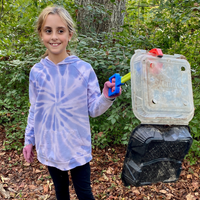 Are you feeling inspired by the awesome impact made during Clean Your Streams Day? You can plan your own waterway clean-up at a time and location of your choosing through our Clean Your Streams 365 program. We’ve got tips to help you get started and to make your clean-up a success.
Clean Your Streams 365 is a year-round effort for clearer, cleaner waterways. Volunteers choose their own time and location to remove marine debris. These clean-ups can be PCS staff or board member-led, or you can choose to clean-on-your-own. In either case, we will provide all clean-up supplies, including gloves, trash bags, grabbers, and data cards to record the marine debris you remove. Once you complete the online registration form, our staff will connect with you to begin making arrangements.
Any public waterway spot where you notice trash is a good candidate for a clean-up, but feel free to ask us if you’d like some site recommendations in your area. We maintain a site master list and may have some insider information on which sites have been tackled recently or could use some extra attention.
Be mindful of waterway conditions as you plan your clean-up. Autumn leaves can bury trash, but once the leaves fall, you may have access to areas that are too brushy to clean in warmer months. Although colder weather reduces your chance of insect encounters, remember that poison ivy is still active at this time of year. The safety tips covered during our Clean Your Streams Site Captain Training will be a helpful starting point if you’ve never planned your own waterway clean-up before.
Tracking the items you remove during your clean-up allows your impact to go beyond one-time trash removal. Our volunteers record clean-up data to compare marine debris from site-to-site and year-to-year, and to share our results with other organizations, government agencies, and companies. We request you record data for your clean-up. You have the option to either use a printed data card and email a copy to [email protected], or use the Clean Swell app. Clean Swell lets you track the marine debris on your smart phone with a simple tap of a tile. The app records the amount of trash you have removed, estimates pounds of trash, and tracks your total distance cleaned. We put together a detailed guide for using Clean Swell that also addresses some frequently asked questions – find it here.
]]>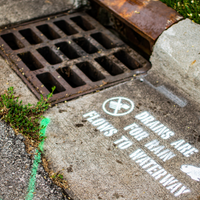 It’s the time of year we love to watch the leaves change color, and the time of year we work hard to keep fallen leaves from clogging our storm drains. This month, we’re taking a look at storm drains as critical features of our local water system, the way leaves and other debris play a role in water pollution, and how we can do our part to steward storm drains.
At the simplest level, leaf litter in storm drains blocks the flow of water. This means enough leaf litter can cause roads to flood. Leaves can also cause blockages inside a drain and harm our local pipes. However, there’s more to the story.
Unlike the drains inside our homes that flow to a sewer treatment plant, the storm drains in our neighborhoods lead straight into our waterways without any treatment. This means anything but pure rainwater is a potential contaminant negatively impacting our area’s water quality. Stormwater runoff can carry excess fertilizer, sediment, trash, and E. coli from pet poo, and all those things can hitch a ride on fallen leaves.
What are the consequences to some of these? Excess fertilizer from yard waste can cause nutrient pollution and oxygen depletion in our streams and rivers. Excess sediment can build up in waterways, causing our rivers to appear brown and making the river bottom too muddy for fish to lay their eggs. Meanwhile, E. coli can make water unsafe for swimming.
Fortunately, there are simple steps anyone can do to help! You can take a pledge to adopt a storm drain this autumn, keeping it clear of autumn leaves, trash, and other debris. Toledo Lake Erie Clear Choices Clean Water has great tips for how to take care of your local storm drains.
Storm drain marking is an easy process to notify our neighbors that what goes into the storm drains comes out in our waterways untreated. So far in 2022, 39 PCS volunteers have marked 424 storm drains and distributed over 800 educational door tags, and we have more storm drain marking planned for this autumn.
Once winter hits, our storm drain marking program will go into hibernation until spring, when the weather permits us to be able to either stencil a painted message or glue a medallion to our storm drains. If you’re interested in trying storm drain marking, you can let us know by filling out our form.
]]>