
Mark your calendars and Save the Date for our 29th Annual Clean Your Streams Day happening on Saturday, September 27th, 2025! Make a lasting impact on your community’s waterways and have fun along the way. Keep an eye out for registration links and more updates COMING SOON!
Join Northwest Ohio’s largest watershed clean-up, now in its 29th year. Individuals, organizations, businesses, and families with children of all ages are welcome to participate in this unique service opportunity.
The clean-up begins with check-in and orientation at several kickoff locations across Northwest Ohio. This year’s locations include University of Toledo, Monroe St. United Methodist Church, Oregon Municipal Building, Secor Metropark, Glass City Metropark, Side Cut Metropark, and City of Perrysburg!
Groups will then be assigned a site where they will undertake a three-hour cleanup. By 9am, volunteers will spread out to their assigned sites, all within the Ottawa River, Swan Creek, Maumee River, Maumee Bay, and Lake Erie tributary watersheds. At noon, volunteers will reconvene for an appreciation picnic, including free food, t-shirts, environmental tables, door prizes, and to announce the winners of Clean Your Streams Challenges.
CYS 29 will also include our week-long, clean-on-your-own Remote Kickoff leading up to Clean Your Streams Day. After you register for the Remote Kickoff, you will choose a public waterway site where you’ll pick up trash and use the Clean Swell app to record what you remove. Complete your clean-up any time from Saturday, September 20th through Saturday, September 27th.
If you or your business are interested in becoming a sponsor of this year’s event, please contact PCS Executive Director, Jesse Stock, [email protected] for more information.
Can’t make it to the event but still want to support the mission? Click the button to donate and be a part of making CYS 29 the best one yet!
Make sure to be following our Facebook, Instagram, X/Twitter, and keeping up to date on our website for more information as we inch closer to the day!


Macroinvertebrates may be small, but they play a crucial role in maintaining the health and balance of our rivers, streams, and lakes. Often unseen, these organisms quietly support ecosystems by breaking down organic material, cycling nutrients, and serving as a vital food source for other wildlife. Today, we’re shining a spotlight on one macroinvertebrate in particular, and soon they’ll be making their seasonal debut!
Whether you call them Mayflies or refer to them as Junebugs, folks in Northwest Ohio know exactly what you’re talking about. Belonging to the order Ephemeroptera—from the Greek ephemera (short-lived) and –ptera (wings)—mayflies are a summertime staple in our region. These fascinating insects have been around longer than the dinosaurs and are considered key indicators of clean, unpolluted water.
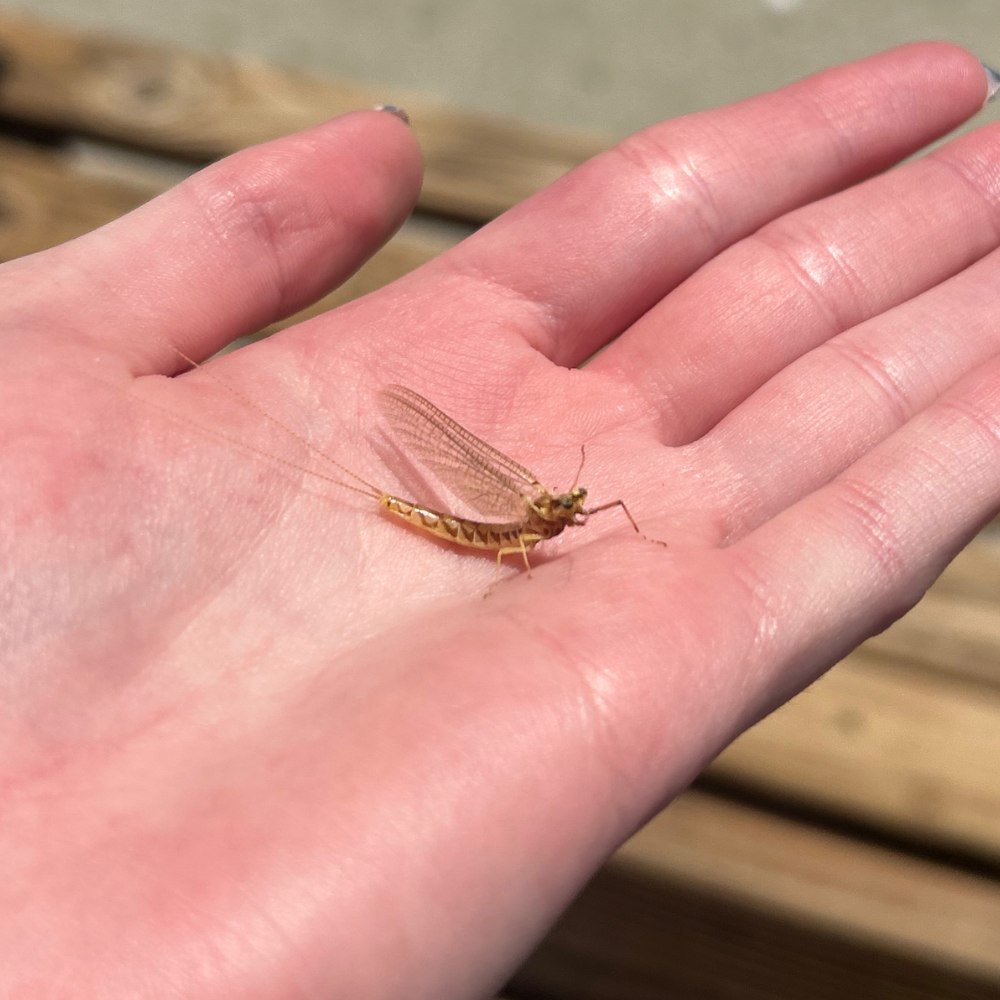
As an indicator species, mayflies are highly sensitive to environmental changes. A decline in their numbers can signal potential water quality problems. Factors like fluctuating water temperatures, increased presence of invasive species, and changing weather patterns all influence their survival and reproduction.
When environmental conditions are just right, here’s what we can expect: After mating, the female mayfly lays her eggs on the surface of the water. These eggs then sink and attach to underwater rocks and plants. Depending on the water temperature and other factors, the eggs hatch within days to several weeks, releasing aquatic nymphs that settle at the bottom of waterways. These nymphs live and grow underwater for up to three years, going through as many as 20 molts (or instars) during their development.
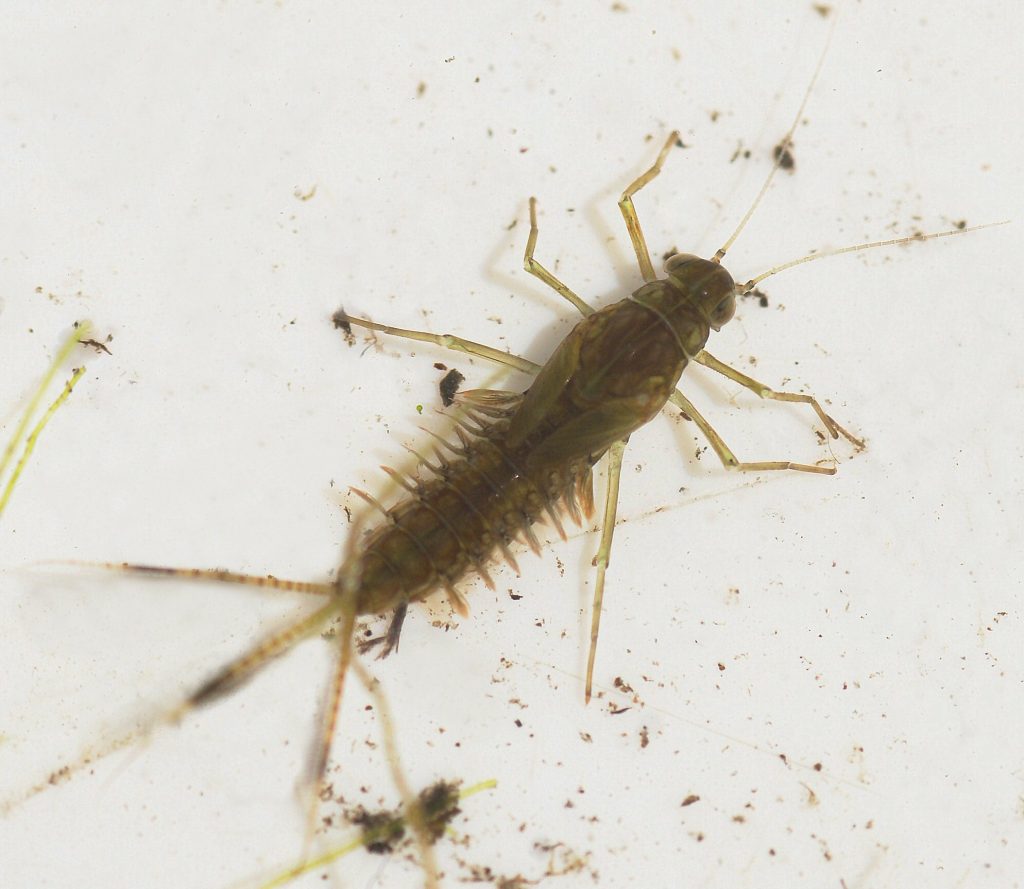
When ready to transition to adulthood, the nymphs rise to the surface and emerge as sub-imagoes, also called “duns.” At this stage, they have dull-colored wings and undeveloped legs, eyes, and reproductive organs. The emergence process takes about 30 seconds, and during this brief period, they’re highly vulnerable to predators.
Once their wings have dried, the sub-imagoes fly to nearby vegetation, where they undergo one final molt to become fully mature adults, known as imagoes or “spinners.” This final transformation can take anywhere from 30 minutes to several hours. These brightly colored adults are now ready to mate, completing the final stage of their life cycle. True to their name, mayflies in this final stage live only about a day.
So, if you find yourself surrounded by a cloud of mayflies this season, don’t panic! Their presence is a strong indicator that our waterways are clean and thriving. And don’t worry, they won’t bite. They don’t even have mouths in their adult stage! While large swarms can be a bit startling, they’re completely harmless.
Here’s a quick tip: If mayflies are getting a bit too close for comfort, gently pick them up by their wings and release them back into the air. Avoid squashing them! Doing so can stain your clothes (and trust us, those stains don’t come out, even with bleach). More importantly, killing mayflies disrupts the local food chain. They are a crucial food source for fish, frogs, birds, and many other wildlife species.
]]>Want to get involved in making an impact on your community? Look no further! There are several clean-ups we are looking forward to this month, and we hope to see you there.
Sign-up for our upcoming programs, including Get the Lead Out and Clean Your Streams 365. Volunteer opportunities are on our website calendar and listed below.

CYS 365
Kitty Todd Nature Preserve Clean-up
- Where: Kitty Todd Nature Preserve
- When: Thursday, June 12th, 9:00am – 12:00pm
- Details: Join us in the Oak Openings Region by Cleaning Your Streams! We’ll meet at the Kitty Todd State Nature Preserve Office at 10420 Old State Line Road in Swanton, OH. The preserve is home to over 100 species of rare plants and has the most state listed plants in Ohio. Come get a new perspective of this Nature Conservancy preserve while getting debris out of this vulnerable ecosystem.

GLO
Get the Lead Out at Blue Grass Island
- Where: Blue Grass Island, 1025 W. River Rd. Maumee, OH 43537
- When: Wednesday, June 18th, 6:00pm – 8:00pm
- Details: Join us to Get the Lead Out! In partnership with Metroparks Toledo help remove debris including fishing line, lures, and more from the shoreline of the Maumee River. Volunteers will be wading across the river to Blue Grass Island, please dress appropriately. Cleanup supplies (gloves, grabbers, trash bags, etc.) will be provided.
- Volunteers will meet PCS and Metroparks staff at the Riverview Area next to the Playground at Side Cut Metropark. Park in the adjacent lot.


Partners for Clean Streams is a local nonprofit dedicated to protecting and improving the health of our rivers and streams. As we gear up for the 29th annual Clean Your Streams Day (September 27th!!), our biggest event of the year, we’re calling on our community to step up and support this vital work.
We rely on the generosity of our members and volunteers to make our year-round programs and educational outreach possible. Your membership or donation directly helps us buy supplies, organize clean-ups, and expand our impact across the region. Without your support, we simply couldn’t do it.
Memberships start at just $15 and come with great benefits, like monthly e-newsletters and the opportunity to take part in a community-wide effort for clean water. Higher levels offer added perks such as voting privileges for PCS Board of Directors, early access to annual CYS T-shirt, and invitations to exclusive events. Whether you’re an individual, a family, a student, or part of an organization, there’s a membership level for you. You can also give the gift of membership to someone who is passionate about preserving our waterways. Every action makes a difference.
